Showing posts with label Pro Photographer. Show all posts

Friday, 15 April 2016

Tagged under: , , , ,

Should we let Facebook kill photography?

Forget the rule of thirds Rafi example photo
I went to a birthday party in February 2013. Two friends of mine, Jacob and Khari, were born just a week apart from one another, and they celebrated together every year. A hundred or more college students packed into their tiny apartment that winter, tossing their coats onto an erupting goose-down mountain on the couch. Theatre geeks sprawled together on low pillows singing and laughing and gossiping. The room's volume seemed to double every few minutes. My shoes, sticky with spilled beer, stuck to the floor as I squeezed through the crowd. It wasn't exactly my scene, but the birthday boys had asked me to take pictures and I wanted to leave them with a memorable image of the night.
When I carry my camera at a party or wedding or news event, my world narrows to what I can see through the viewfinder: subject, composition, and light. Those are the three building blocks photographers use to capture a moment. The crowd sang "Happy Birthday" and through all the jostling, sweaty elbows I saw these expressions of utter joy flash across Jacob and Khari's faces. I lifted and tilted the camera to surround them with their friends in the frame and—
SNAP
The shot, which sits at the top of this article, came out perfectly (if I do say so myself.) It cuts through the fuss and frenzy of the scene to tell a story about its subjects. Here's what it felt like to be Khari at this moment, in this place, at this stage of his life. Here's what it felt like to be Jacob. 
Photography is more like writing than anything else. It's not about bringing you into an environment, it's about showing you something about what it was like to live that moment in that environment. And, as a moment-driven medium, it plays a unique role in our lives that virtual reality, an environment-driven medium, can't replicate.
But that's not how Mark Zuckerberg, CEO of the company that hosts the vast majority of the world's new photographs on its servers, seems to feel. 
During his keynote at Facebook's F8 conference Monday, Zuckerberg spelled out his corporate mission: "Give everyone the power to share anything with anyone."
With appropriate zeal for a Silicon Valley techno-messianist, he presented that mission as the antidote to everything from Trumpism to the horrific violence people are living through in Syria. And he made clear that while Facebook may empower its users to share "anything," he has a specific vision of what that anything should be.
When I was a baby and I took my first steps, my parents wrote down the date in a baby book so they could share it with friends and family. When my nephews took their first steps, my sister took photos and videos on her phone so she could send them to us. And when my daughter Max takes her first steps ... I want to capture the whole scene with a 360 video so I can send it to my family and my friends and they can go into VR and feel like they're right there in the living room with us.
You or I might wonder at the logistics involved in the young billionaire keeping a stereoscopic 360-degree camera handy with an operator ready to go at a moment's notice. But it's hard to deny the futuristic appeal of recording the moment Max hauls herself up on a chair leg and ventures out across the expanse of their living room as a virtual reality scene. He can return to it again and again in his old age, laugh at the hoodie marl he preferred back then, watch his infant daughter toddle, then turn to look at the delight on his own young face.
"We're always trying to capture this purest form of an idea or an experience," he said.
If that's how he wants to remember Max's childhood, more power to him. Virtual reality is a crazy, exciting technology with implications we're only just beginning to understand.
But the way Zuckerberg talks about photography, as just a point low on the exponential graph of information richness, makes me nervous.
selfiesRafi Letzter/Tech Insider
Through his billion-plus customers, Zuckerberg may have more power over the way we create and share stories than any other single person in our species' history. But he thinks about subjective experience and memory with all the nuance of an electrical engineer.
Photographs — including selfies and awkward group photos, fulfill a specific role in our lives. If virtual reality replaces photographs it will be by erasing, not enriching the way we think about and return to our pasts. Memory will become an environment we inhabit, not a set of feelings and stories we return to. And it will be a more remote destination; you can't hang a virtual reality experience on your wall.
Some people will argue that VR's impending dominance is only a good thing, the Darwinian triumph of superior technology over the played-out. We're witnessing the beginning of this as Facebook in particular and social media in general move to emphasize fleeting experiential content like Live Video over more solid, static totems like photographs. And Facebook's purchase of the virtual reality platform Oculus tells you a great deal about how they imagine the online social future.
But I have to admit I'm not on board. I'd much prefer to live in a word where the two media live side-by-side, and where people engage with both on their own terms. 
Is such a world possible? It looks like that's up to Zuck. 

Saturday, 9 April 2016

Tagged under: , ,

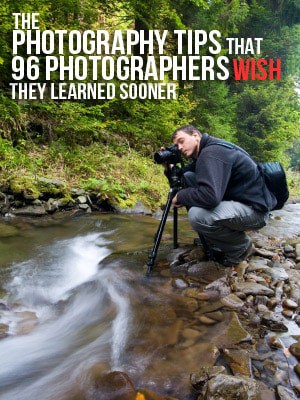
THE PHOTOGRAPHY TIPS THAT 96 PHOTOGRAPHERS WISH THEY WOULD’VE LEARNED SOONER


Two weeks ago (I know, I’m slow…) on the Improve Photography Facebook fan page, I asked our community what photography tips they wish they would have learned sooner.  I was looking for lessons that many photographers procrastinate learning and it ends up keeping them back from progressing as photographers.
Over 96 photographers commented on that facebook comment with their hard earned lessons, and I grabbed the most popular lessons from the group to share here.  I hope that this article teaches you many ways to save yourself from making rookie mistakes (like I still seem to do every day!).

LESSON #1: ENVISION, PLAN, AND THEN CREATE

There is nothing–at all-wrong with looking at great photography to get creative inspiration.  Spend the time thinking and thinking of what type of photo you want to create and how you can do it.  Then, get to work.  Almost every one of my best shots are the result of weeks of planning.  Rarely did I just “happen” to find a great scene or model to photograph.  Make each photo “your own,” whether it be a little bit different lighting or composition, make it feel personal (Tip submitted by Brendan Williams and Chris Mullins)

LESSON #2: THE HISTOGRAM IS NOT OPTIONAL

Spending just 5 or 10 minutes to learn how to use the histogram can make a huge difference in your photography.  Personally, I use the histogram most of the times that I go out and shoot.  I use it when shooting a wedding to make sure that the bride’s dress is not overexposed, I use it when shooting landscapes in low light to make sure I am gathering enough light, etc.  Learn to use the histogram (Tip submitted by Mike Gothard, Thorpe Griner)


By getting the flash off the camera, the lighting changes dramatically for the better.  Directional light throws pleasing shadows on the subject and highlights the natural curvature of the face. If you haven’t yet learned how to fire the flash off-camera, I recommend checking out my
 lighting gear recommendations page.  There, you’ll find a $20 flash trigger that works flawlessly. No need to change camera settings at all.  Just put the trigger on the hot shoe of your camera (the hook on the top of your DSLR) and attach the flash receiver to the bottom of ANY flash.  That’s all it takes.  Take a picture and your flash will fire. (Tip submitted by Rick Walther, Teara Galbraith)LESSON #3: LEARN TO WIRELESSLY FIRE THE FLASH OFF-CAMERA

LESSON #4: LEARN TO CHANGE THE ACTIVE FOCUS POINT

For most (but not all) photography, I recommend using a single autofocus point rather than allowing the camera to choose several points.  When many photographers learn to use one focus point, they often use only the center focus point.  To do this, they focus on the eye of the subject or on the correct place for a landscape, and then recompose the picture while holding the shutter button half-way down.  After composing to the correct composition, the photographer then finishes pressing in the shutter button. If you sit down for a minute with your camera manual and learn to change the focus point, then you will likely get a much larger percentage of your shots in focus. (Tip submitted by Lyndsey DeSantis, Liam Behan)
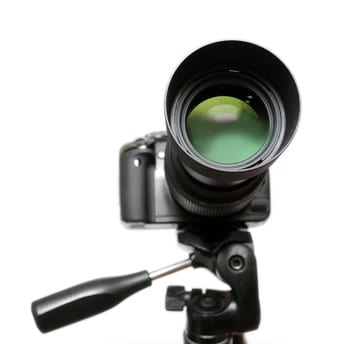
Photography tripod and dslr
FRIENDS DON’T LET FRIENDS WASTE MONEY ON CHEAP TRIPODS

LESSON #5: WITH TRIPODS, IT’S “BUY RIGHT, BUY ONCE”

Several of our Improve Photography community commented that they wish they wouldn’t have wasted their money on cheap tripods.  The cheapies might seem like good deals, but you’ll end up buying four or five before you finally break down and buy a good one that will last your lifetime. Not sure which tripod to buy?  Check out my recommendations of the best tripods on the market. (Tip submitted by Derek Bell-Jack, Steve McCusky, Dave McKenzie)


When I saw this tip, which was submitted by Roel Knol, Chand Dumbris, Patsy J Lander, on the Facebook page, I knew this one had to be included in the list.  Personally, I spent about the first year of my photography focused on the tiny little technical details, hoping my photography would improve.  I learned too late that great photography is about interesting light and strong composition.  Everything else is just a cherry on top.
LESSON #6: PHOTOGRAPHY IS REALLY ABOUT COMPOSITION AND LIGHT

LESSON #7: MANUAL MODE

There is no need to be afraid of manual mode.  Just turn it on and start playing–you’ll figure it out quick.  If you understand what shutter speed, aperture, and ISO do, you’ll quickly learn how to shoot in manual.  Perhaps the biggest mistake beginning photographers make when starting to shoot in manual mode is that they expect to nail the shot the first time.  Manual mode is a process of trial and error.  You’ll get faster and faster at judging the correct settings, but you have to accept the fact that it will take a few tries for each set up.  (Bronnie Thompson)

LESSON #8: BOUNCE FLASH

Most photographers buy a flash with their new camera, but most beginners just aim the flash head right at the subject and shoot.  If you point the flash at the ceiling or a side wall and bounce the flash onto the model, you’ll get significantly softer and more flattering light.  It’s incredibly easy to learn, but many photographers are afraid to try it for the first time. (Ryan Fernandez)
Photographer with camera
THIS PHOTO ILLUSTRATES TWO PRINCIPLES: (1) THIS IS A GREAT USE OF EXPOSURE COMPENSATION TO GET A BRIGHT AND WARM FEELING, AND (2) YES, IT IS APPARENTLY POSSIBLE TO BE TOO IN LOVE WITH YOUR CAMERA.

LESSON #9: EXPOSURE COMPENSATION

I must admit that it took me a while to learn to use exposure compensation.  I felt like my head was already spinning just trying to understand the aperture, so the thought of changing the exposure in aperture priority was a daunting task when I started out.  Once I tried it, though, I was so glad I did! Exposure compensation is simply a way of telling the camera that the exposure it is picking is not what you want.  You simply scroll the little wheel on your camera to choose a brighter (+1 or +.7 exposure compensation, for example), or a darker picture (-1 or -.7 exposure compensation).  You set the exposure compensation and then the camera will choose the setting that it things is the correct exposure and then add or remove a little brightness according to what exposure compensation you choose.  (Submitted by Jim Thurman)

LESSON #10: IT IS NOT “CHEATING” TO USE PHOTOSHOP

I have strong feelings about the importance of using digital image editing in our photography.  In fact, I had a conversation with Dustin Olsen (who is working with me at Improve Photography now), about digital image editing a couple days ago and was glad to hear that he feels just like I do.  My photography is not news, my photography is art.  Just like a painter can put whatever she wants in a painting, I feel that I can do whatever I want to my photos in Photoshop as long as I don’t lie and tell people it is a representation of the actual scene. If you’re passionate about this topic too, check out this article on why I think digital image editing is perfectly okay.  (Idea submitted via Facebook by Terasa Lewis)
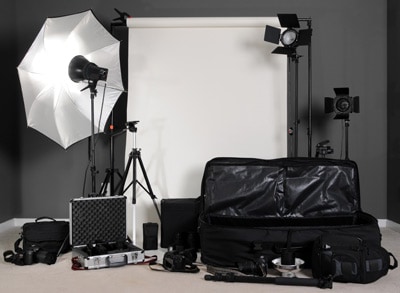
Photography gear
SOME DAY MY WIFE WILL DIVORCE ME IF I DON’T CLEAR ALL OF MY PHOTO GEAR OUT OF THE GARAGE :-)

LESSON #11: DON’T BUY MORE GEAR UNTIL YOU HIT A WALL WITH THE GEAR YOU ALREADY HAVE

I often get emails from brand new beginning photographers asking what lens they should buy because their 18-55 kit lens isn’t sharp enough.  I’ll be perfectly honest… I’ve never met a photographer who has less than one year of experience who is better than the kit lens.  I’m not saying that their pictures couldn’t be helped out a tiny bit by a sharper lens, but I  am saying that there are about 100 more important things for a beginner to master before anyone is going to notice that the picture is barely less sharp from the lens.  99% of sharpness problems that I see are caused by poor shooting technique, and not a cheap lens.  Once the photographer masters the fundamentals, then a new lens is an important investment and the sharpness will definitely improve. The same is true for many other photography gear items.  It isn’t necessary to buy $3,000 in studio equipment unless you’ve already learned how to use a bare bones $120 lighting set upto its full advantage.  It probably isn’t necessary to buy a $1,500 macro lens until you’ve reached your limit by using a simple close focus filter.  It probably isn’t necessary to buy a 5d mark II until that is the weak link in your photography. I love gear, but I feel bad when I hear photographers say they feel limited by their beginner gear when, in reality, they should probably just get out there and shoot more.  (Abby Krim)

LESSON #12: A $15 REFLECTOR WILL DO MORE TO IMPROVE YOUR PHOTOGRAPHY THAN A $2,000 PORTRAIT LENS

I read this comment by Krista Barton DeVries on our Facebook fan page and I knew this one had to be included in the article.  Lighting… is…. everything!  I’m amazed at the number of photographers that invest in a $2,500 70-200mm f/2.8 lens before even buying a simple lighting kit for $120.  There are few photographers who love getting a new lens in the mail more than I do, but I have to agree that if you really want your pictures to improve, spending a little money on a reflector or other cheap lighting accessories will do much more to improve your photography.

LESSON #13: GET A DEPOSIT BEFORE BOOKING A SHOOT

I read this hard-earned lesson sent in by Troy Browder and I had to laugh, because any pro photographer who has been around for a while has been burned.  I learned the hard way, too.  Get a deposit and get a contract before ever putting a client down on your calendar.  It’s just good business.
Photography Tips
DON’T YOU WISH THE CAMERA MANUFACTURERS WOULD GET ON THE BALL WITH ADDING SWIVEL SCREENS TO ALL DSLRS? IT’S SUCH A PAIN TO LIE DOWN PROSTRATE ON THE GROUND JUST TO GET A LOW ANGLE.

LESSON #14: SHOOT MANY DIFFERENT SHOTS, BUT DON’T WASTE TIME GETTING 10 COPIES OF THE SAME SCENE

I’ll admit that this lesson is a bit controversial.  Many photographers (including a lot of great photographers) like to take 10 or 15 shots of each shot.  Personally, I like to make sure that every picture I take is different from the previous one, even if the difference is only slight.  If I see a scene, I’ll shoot it once, analyze the picture, change my angle or the exposure slightly, and then shoot again.  Rather than just ripping the shutter to get multiple shots of the scene, I like to change each shot just slightly as I work the scene.  This makes me slow down and not get stuck with the first shot of the scene, but rather keep changing until I find the exact right angle. Work your photography like a surgeon making tactical strikes rather than a trash man just trying to do the same thing over and over again.  (Dawn Fort)

LESSON #15: LEARN WHERE TO FOCUS WHEN SHOOTING A GROUP OF TWO OR MORE PEOPLE

Incredibly important!  When shooting a group photo when you want to use somewhat shallow depth of field, make sure to focus on the person closest to the camera.  This is also true for shooting couples where one person is slightly in front of the other person.  Many, many times I have made the mistake of focusing on someone in the group who is one or two rows back, but this always make the shot look blurry.  With time, I’ve learned to ALWAYS focus on the person in the group closest to the camera.  (Paulette Gollan)

Thursday, 25 February 2016

Tagged under: , ,

Photography Experience Not Required, or: Why Some Camera Stores Are Hurting

nophotoexperience
Warning: this is a rant. This one just left me shaking my head. Sure, there are probably times when you think the words “Photography Experience Not Required” might be completely applicable or acceptable. But how about in a job listing for a camera store?

I got an email saying that a local camera store near me was looking for a customer services sales clerk. This isn’t a professional photographers type of store as much as it is your classic consumer-oriented small camera store that has survived places like Best Buy moving in down the street.
So just for giggles, I skim through the ad listing. All standard fare yada-yada until I get to the part that says “Photography Experience Helpful, but not Required.”
helpwanted
Say what? Excuse me? A camera store not requiring it’s employees to have photography experience? It may be a bit extreme, but could you imagine an Engineering position saying “Knowledge of Mathematics Helpful, but not Required,”?
I’m sorry, but a camera store not requiring photography experience seems like yet another grand step toward lowering the bar as to the quality of help, knowledge, and expertise of the people put into a position where some basic level of knowledge should be expected on behalf of the consumer.
I remember many moons ago my old bosses didn’t want to hire photographers because they were worried about the eventual competition aspect. But after so many employees who had little to no photography experience washed out, it became clear that bringing people with a solid level of understanding or experience with photography ultimately reflected on our business well to our clients and the service we were able to provide.
All I can say is that any camera store that doesn’t hire or require its people to have photography experience is not a place that I plan on patronizing. Seriously, have a little more respect for your customers.
End rant.

About the author: Gary Crabbe is a photographer based in Pleasant Hill, California, just outside San Francisco. His Enlightened Images web site has been ranked one of the most popular individual photographer sites on the the Internet. You can find his work on hiswebsite, Facebook, Twitter, and Flickr. This article was also published here.

Monday, 22 February 2016

Tagged under: , ,

Learn and Master aerial photography: 5 drone choices for all levels

Forget selfies. Aerial photography and cinematography is now amazingly accessible. Here are the tools you need to get stunning shots.


Done right, UAV photography and videography can be enchanting, jarring our perspective and opening the world up in new scales and dimensions. The barrier to entry is incredibly low, but with so many choices it's difficult to know what to buy for your needs.
We asked aerial shooting specialist Philip Lima to weigh in with his choices. Here they are below, along with some suggestions of our own.
And if you want to shoot like a pro, check out Lima's tips for excellent aerial photography and videography:

The entry level shooter

You're new to drones or new to photography. Either way you want to get in the air and take some great looking photos or video in a portable, easy-to-use package.


dji-phantom-3-professional-advanced-5.jpg

Philip recommends the DJI Phantom 3 series.
"I have the Pro version, because I've had everything, and I still use it. I've taken it mountain biking and the footage I get is absolutely beautiful. It doesn't do what the highest end systems can, but it's pretty amazing."
The Pro version is pricier at $1000, but the Phantom 3 Standard will set you back just under$500, and you get a lot of intelligence and a nice camera package for the price.
It's particularly suited to beginners. Built-in GPS records the Phantom's takeoff point and remembers it as you fly. If the control signal is ever lost, the Phantom returns home instantly, adding a layer of security and a workaround to the dreaded flyaway.


The Phantom 3 is fabulously stable and can fly for 25 minutes on a single charge.
The built in camera is more than respectable, shooting 2.7K video at 30 frames per second and a maximum of 40 Mbps. Or record in full 1080p HD at a variety of frame rates.
For still shooting, the Phantom 3 shoots 12 megapixel JPEG files or DNG RAW with a 1/2.3" sensor, a 20mm equivalent f/2.8 prime lens, and a preset focus optimized for aerial images. That means you pay attention to shot setup and not worry so much about your depth of field.

The intermediate shooter


img3337.jpg
Philip Lima

It's DJI's world, we just fly in it. If you want some truly professional photos or video without going (totally) broke, the Philip recommends flying the DJI Inspire with the X5 camerapayload.
The X5 series of cameras has brought all the power of the mirrorless revolution in digital photography to drones. It uses a micro 4/3 system, which was originally developed by Olympus and Panasonic and for which there are SO many amazing lenses.
The stats for the entry level X5, which is going for $1699 without a kit lens, are impressive:
  • 4K video at up to 30fps
  • Record at 4096×2160 (24fps) or1920x1080 (60fps)
  • 16MP photographs
  • 12.8 stops of dynamic range
The X5R is a step up in performance, but also cost at $3199.
  • Lossless cinema 4K RAW video
  • Record at 4096x2160 (24fps) or 1920x1080 (60fps)
  • Average 1.7 Gbps bitrate (2.4Gbps maximum)
  • Removable 512GB SSD
  • 16MP photographs
  • 12.8 stops of dynamic range
Of course you'll need a drone to fly it. Philip is a fan of DJI's Inspire series, which will give that sweet X5 payload an easy lift. You can find an Inspire Pro and X5 package for $5049.

Hollywood, baby

What does Philip Lima shoot with? Not surprisingly, the two systems already mentioned are in his tool bag and get used all the time. But to squeeze everything he's got out of a shoot, he uses two top-of-the-line systems.
The first is the CineStar-8, a heavy lift quadcopter from FreeFly, which cut its teeth making insanely steady handheld rigs for videographers.


zd-copters.jpg
Philip Lima
zd-get-close.jpg
Philip Lima

At $7,415, this is not a hobbyist UAV. You can nerd out on the specs here, but the most important thing this baby does is hoist what is without doubt the best camera for professional aerial videography: The Epic Red. Capable of 5K resolution, different Epic packages can cost north of $50,000.
For a more modest professional debut, Philip recommends the DJI S1000 octocopter flying either 5D Mark III or a GH4 from Panasonic. Both cameras are popular with budget filmmakers and professional photographers.
The DJI S1000 starts at $1900.

The hacker

Why buy when you can make? Check out our build notes for the DIY $200 drone.


pi0-kit.jpg
Source :http://www.zdnet.com/
Tagged under:

The best photography exhibitions of 2016


Saul Leiter: Taxi, ca.1957 
Saul Leiter: Taxi, ca.1957  CREDIT: HOWARD GREENBERG GALLERY

Sponsored by Babbel
list of article image 2
The fun and easy way to learn a new language
Stay curious and connected. When you can speak another language your world becomes bigger, richer and more inspiring. Learn with Babbel – it’s fun, easy and effective.


Performing for the Camera, Tate Modern
Where: Tate Modern
Address: Bankside, London SE1 9TG
Until: June 12
In a nutshell: Selfies, marketing, early ballet films and school photographs all feature in this intriguing exhibition. An impressive array of artists including Marcel Duchamp, Cindy Sherman, and Yayoi Kusama back up the thesis that performance is essential to photography.

Amalia Ulman, 'Excellences & Perfections' (Instagram Update, 8th July 2014) 
Amalia Ulman, 'Excellences & Perfections' (Instagram Update, 8th July 2014)  CREDIT: AMALIA ULMAN/ARCADIA MISSA

Vogue 100: A Century of Style
Where: National Portrait Gallery
Address: St. Martin's Pl, London WC2H 0HE
Until: May 22
In a nutshell: Visiting this extraordinary journey back in time through the fashion bible's archives is like flicking at random through a copy of Vogue that you’re physically walking through. A knockout exhibition about storytelling, image-making and personalities

Anne Gunning in Jaipur by Norman Parkinson, 1956
Where: The Photographer's Gallery
Address: 16 - 18 Ramillies St, London W1F 7LW
Until: April 3
In a nutshell: Now regarded as one of the great pioneers of 20th century photography, Saul Leiter was known for experimenting with colour film on the streets of New York in the Fifties and Sixties. The results, as this exhibition illustrates, were glorious. 

Harlem, 1960 
Harlem, 1960 

Where: Natural History Museum
Address: Cromwell Road, London SW7 5BD
Until: May 15
In a nutshell: Curated by artist and writer Michael Benson and featuring original music by Brian Eno, Otherworlds explores the beauty of the solar system. Art and science combine in the 77 composite images on display.
Where: Imperial War Museum
Address: Lambeth Road, London, SE1 6HZ
Until: April 24
In a nutshell: The first UK display of Eleven Women Facing War, an exhibition of photographs and film following the stories of eleven women in different conflict zones from 2001 to 2011, by award-winning British photographer Nick Danziger.

Nick Danziger: 'Mah Bibi, Afghanistan, 2001'

Where: Snap Galleries 
Address: 12 Piccadilly Arcade, London, SW1Y 6NH
Until: March 5
In a nutshell: A collection of unpublished post-Pistols-pre-PIL-period photographs taken in London by Paris-based photographer Pierre Benain, who became friends with key figures of the Punk scene in the late Seventies

Here's To You!
CREDIT: PIERRE BENAIN 
Where: The Nunnery Gallery
Address: 181 Bow Rd, London E3 2SJ
Until: March 27
In a nutshell: The German photographer's pictures of plastic everyday objects (hair rollers, kitchen utensils, drinks bottles) make reference to vanitas, an eighteenth-century genre of still-life painting. 
Where: National Portrait Gallery
Address: St Martin's Place, London WC2H 0HE
Until: 21 February
In a nutshell: The leading competition to celebrate and promote the best in contemporary portrait photography from around the world

Nyaueth by Peter Zelewski, 2015
Nyaueth by Peter Zelewski, 2015 CREDIT: PETER ZELEWSKI
Where: Science Museum
Address: Exhibition Road, South Kensington, London, SW7 2DD
Until: 28 March
In a nutshell: Marking the 200th anniversary of the pioneering photographer's birth, the exhibition includes the Herschel Album - the images which Cameron considered to be her finest work and which immortalise the Victorian age.

Sappho, 1865
CREDIT: JULIA MARGARET CAMERON/VICTORIA AND ALBERT MUSEUM, LONDON
Where: Natural History Museum
Address: Cromwell Road, London, SW7 5BD
Until: April 10
In a nutshell: The very best wildlife photographs from the past year

Where: Media Space, Science Museum
Address: Exhibition Road, London, SW7 2DD
Until: March 28, 2016
In a nutshell: First major UK exhibition by award-winning American photographer Alec Soth
Read The Telegraph's interview with Alec Soth 
Where: Imperial War Museum
Address: Lambeth Rd, London SE1 6HZ
Until: April 24, 2016
In a nutshell: Showcases Lee Miller's startling photographs of women involved in the war effort.
Read The Telegraph's interview with Miller's son, Antony Penrose, on the subject of the exhibition.

Models resting ahead of a fashion show, Paris, 1944
Models resting ahead of a fashion show, Paris, 1944 CREDIT: LEE MILLER

Article is Published under the courtesy of  :www.telegraph.co.uk/