Friday, 15 April 2016

Tagged under: ,

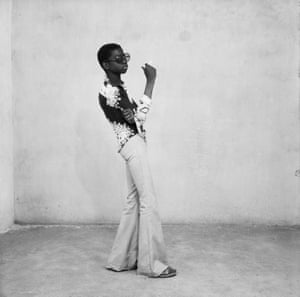
When Malick SidibĂ©’s Photographs Danced Before Me


Surprise-Party-Malick-Sidibe

My interest in the politics and aesthetics of photography started from an unlikely source: Dambudzo Marechera, the enfant terrible of African literature. In his seminal text The House of Hunger, a coming of age novella set in the 60s and 70s, he writes about Solomon, a township photographer who could obliterate ‘the squalor of reality’ with his photographs. His customers, who have little hope of ever leaving the township can only realize their dreams of escape through the illusions he creates:
Photographs of Africans in European wigs… Africans who pierce the focusing lens with a gaze of paranoia. The background of each photo is the same: waves breaking upon a virgin beach and a lone eagle swiveling like glass fracturing light towards the potent spaces of the universe. A cruel yearning that can only be realized in crude photography.
The residents of Marechera’s house of hunger were growing up in the era of Malick SidibĂ©’s early photography. At the time, they were bombarded with images from colonial media institutions. These constructions of blackness were proverbial masks that, writes Laura Taitz in Emerging Perspectives on Dambudzo Marechera “served to hamper any attempt at self-definition or self-representation.” The masks embody the contradictions of colonized identities and the politics of representation, subjects Marechera obsessively grappled with in his subsequent works, Black Sunlight and The Black Insider.
Sidibé is the antithesis of Solomon. He set out to change the idea of black beauty and fashion through his street photography and studio portraits instead of imposing or maintaining the prevailing photographic models based on Western aesthetics.
Malick-Sidibe-Christmas-Eve-1963Nuit de NoĂ«l, 1963 by Malick SidibĂ©
The first image of Malick SidibĂ© I encountered was the portrait of a young couple dancing at a Christmas party. It is one of the most iconic images from his oeuvre that spans a wide spectrum. The pose here is unrehearsed. It is graceful and dynamic and encapsulates the hallmark of SidibĂ©’s photography that captured the energy and hope of a generation of young ­black Africans living in a period of political and social transition.
His early photography affirms his participation in the decolonization of the 1960s, and in shaping the new look of young black and proud Africans who were consciously stylish and au courant. There is something rebellious and doggedly determined in their moves and gazes. By photographing them in the manner in which they wanted to be seen, SidibĂ© too was insisting on their right of being.
Looking at his photographs today, it is easy to see how productive they were in shaping the African worldview and creating a lexicon of black identity. Sidibé never stopped documenting youth culture and style in Mali. His photography journey began with youths dancing their way out of their colonial past into an era of freedom, expression and fashion.
The import of SidibĂ©’s contribution to the African sensibility and image is huge. His work is understated and yet sophisticated in its detail, especially the interaction of space, movement and subject. He was the first African and the first photographer to win the Golden Lion for Lifetime Achievement at the 2007 Venice Biennale that was themed, “Think with the Senses Feel with the Mind.” His place in the pantheon of photography greats is assured.
Tagged under:

Annenberg Space for Photography opens new exhibition on refugees across the world


Annenberg Space for Photography opens new exhibition on refugees across the world
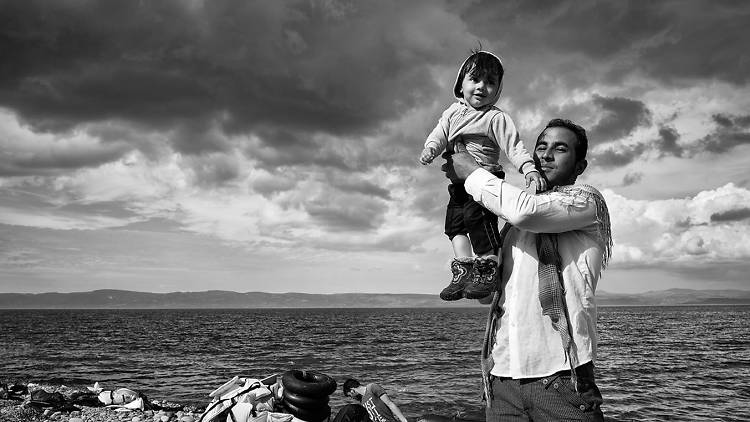
Photograph: Tom Stoddart, courtesy of the Annenberg Space for Photography
We've been anxiously awaiting the Annenberg Space for Photography's upcoming exhibition, REFUGEE, which opens on Saturday, April 23, and will feature photographic work illuminating the global refugee crisis. It's a timely choice considering the number of displaced people across the planet has reached more than 60 million, according to the UN Refugee Agency. Five internationally acclaimed artists—Lynsey Addario, Omar Victor Diop, Graciela Iturbide, Martin Schoeller and Tom Stoddart—will show photographs taken in Bangladesh, Cameroon, Colombia, Croatia, Germany, Greece, Mexico, Myanmar Serbia, Slovenia and the United States.
According to Annenberg Foundation CEO Wallis Annenberg, the exhibit is a way to explore and promote meaningful dialogue about this complex political issue, "even where there is contention and controversy." The point here is not merely to see or hear about the crisis, but to understand its ramifications. "These extraordinary and visionary artists don't advocate, they illuminate; they don't argue a position, they enlighten," says Annenberg. "I believe it's essential viewing, so we don't just see what's happening in our world, we feel it."
The Annenberg Foundation and Annenberg Space for Photography also partnered with the nonprofit VisionWorkshops to provide a photography camp in Soacha, Colombia, for displaced children, giving them the opportunity to document their experiences through both photography and writing. Work from this camp can be seen at REFUGEE, in addition to a virtual reality experience that will transport guests to Soacha to experience what life is like there for displaced people.
Tagged under: , , , ,

Should we let Facebook kill photography?

Forget the rule of thirds Rafi example photo
I went to a birthday party in February 2013. Two friends of mine, Jacob and Khari, were born just a week apart from one another, and they celebrated together every year. A hundred or more college students packed into their tiny apartment that winter, tossing their coats onto an erupting goose-down mountain on the couch. Theatre geeks sprawled together on low pillows singing and laughing and gossiping. The room's volume seemed to double every few minutes. My shoes, sticky with spilled beer, stuck to the floor as I squeezed through the crowd. It wasn't exactly my scene, but the birthday boys had asked me to take pictures and I wanted to leave them with a memorable image of the night.
When I carry my camera at a party or wedding or news event, my world narrows to what I can see through the viewfinder: subject, composition, and light. Those are the three building blocks photographers use to capture a moment. The crowd sang "Happy Birthday" and through all the jostling, sweaty elbows I saw these expressions of utter joy flash across Jacob and Khari's faces. I lifted and tilted the camera to surround them with their friends in the frame and—
SNAP
The shot, which sits at the top of this article, came out perfectly (if I do say so myself.) It cuts through the fuss and frenzy of the scene to tell a story about its subjects. Here's what it felt like to be Khari at this moment, in this place, at this stage of his life. Here's what it felt like to be Jacob. 
Photography is more like writing than anything else. It's not about bringing you into an environment, it's about showing you something about what it was like to live that moment in that environment. And, as a moment-driven medium, it plays a unique role in our lives that virtual reality, an environment-driven medium, can't replicate.
But that's not how Mark Zuckerberg, CEO of the company that hosts the vast majority of the world's new photographs on its servers, seems to feel. 
During his keynote at Facebook's F8 conference Monday, Zuckerberg spelled out his corporate mission: "Give everyone the power to share anything with anyone."
With appropriate zeal for a Silicon Valley techno-messianist, he presented that mission as the antidote to everything from Trumpism to the horrific violence people are living through in Syria. And he made clear that while Facebook may empower its users to share "anything," he has a specific vision of what that anything should be.
When I was a baby and I took my first steps, my parents wrote down the date in a baby book so they could share it with friends and family. When my nephews took their first steps, my sister took photos and videos on her phone so she could send them to us. And when my daughter Max takes her first steps ... I want to capture the whole scene with a 360 video so I can send it to my family and my friends and they can go into VR and feel like they're right there in the living room with us.
You or I might wonder at the logistics involved in the young billionaire keeping a stereoscopic 360-degree camera handy with an operator ready to go at a moment's notice. But it's hard to deny the futuristic appeal of recording the moment Max hauls herself up on a chair leg and ventures out across the expanse of their living room as a virtual reality scene. He can return to it again and again in his old age, laugh at the hoodie marl he preferred back then, watch his infant daughter toddle, then turn to look at the delight on his own young face.
"We're always trying to capture this purest form of an idea or an experience," he said.
If that's how he wants to remember Max's childhood, more power to him. Virtual reality is a crazy, exciting technology with implications we're only just beginning to understand.
But the way Zuckerberg talks about photography, as just a point low on the exponential graph of information richness, makes me nervous.
selfiesRafi Letzter/Tech Insider
Through his billion-plus customers, Zuckerberg may have more power over the way we create and share stories than any other single person in our species' history. But he thinks about subjective experience and memory with all the nuance of an electrical engineer.
Photographs — including selfies and awkward group photos, fulfill a specific role in our lives. If virtual reality replaces photographs it will be by erasing, not enriching the way we think about and return to our pasts. Memory will become an environment we inhabit, not a set of feelings and stories we return to. And it will be a more remote destination; you can't hang a virtual reality experience on your wall.
Some people will argue that VR's impending dominance is only a good thing, the Darwinian triumph of superior technology over the played-out. We're witnessing the beginning of this as Facebook in particular and social media in general move to emphasize fleeting experiential content like Live Video over more solid, static totems like photographs. And Facebook's purchase of the virtual reality platform Oculus tells you a great deal about how they imagine the online social future.
But I have to admit I'm not on board. I'd much prefer to live in a word where the two media live side-by-side, and where people engage with both on their own terms. 
Is such a world possible? It looks like that's up to Zuck. 
Tagged under: , ,

Malick Sidibé: the photographer who changed the idea of black beauty

The photographer, who has died aged 80, was known for his hugely influential shots of post-independence Mali
One of Malick SidibĂ©’s era-defining photographs. Courtesy Fifty One Fine Art Photography, Antwerp Barbican - September 2012 monthly round-up.
With his electric style, Malick SidibĂ©, who has died aged 80, was the Malian photographer who changed the idea of black beauty in fashion.
His most celebrated shots were the street photography that documented the jubilant fizz of post-independence in Bamako. With his 35mm camera, he captured the new urban elite: the Malians who had absorbed the stylistic cues of Jimi Hendrix, the Beatles and James Brown.
Sidibé captured the hip young things as they went from a colonial past to independence, resplendent in their leopard-print flares, finely cut berets and matching white outfits mid-dance.
When SidibĂ© received his Golden Lion lifetime achievement award at Venice’s Biennale in 2007, the art critic Robert Storr said: “No African artist has done more to … increase our awareness of the textures and transformations of African culture in the second half of the 20th century.”
Tagged under:

[Updated] 'Photographer from Hell' Sued After Wedding Photography Catastrophe

[Updated] 'Photographer from Hell' Sued After Wedding Photography Catastrophe
Shooting a wedding can certainly be a daunting task, especially if you're new to the genre. However, self-described "up and coming photographer" Chloe Johnston soon learned that they, just like every other business venture, have a serious job that should not be taken lightly. In this instance, I'm not sure if it was a lack of experience, or maturity, or both. Ultimately she did not deliver a desirable final product. After which, she publicly tried to defame the bride and groom once they attempted to voice their concerns to her about the low photo count and overall poor quality of the images delivered.
There were various other grievances that the couple noted about Johnston including a deficit of equipment and tardiness. The main issues that I seem to find are as follows and as such can also serve as words of warning for anyone that is interested in becoming a professional photographer.

Food for Thought

  • Communication is key. According to an article from The Mirror, Johnston took a deposit and then made no other communications with the couple that she would be attending until 10 p.m. the night before the ceremony. Additionally, she arrived 45 minutes after the reception had already begun which leads me into the next point.
  • If you’re hired to complete a job, it’s extremely important to be able optimize the time you’re given. Especially if you’re on an hourly rate. Things like showing up on time and showing up with enough time that you can set up equipment prior to the slotted time are important. Additionally, it’s also important that you stay on task and not get sidetracked to things that aren’t actually in your job description for what you’re working on.
  • Organization is critical; Whether it be your finances, your image data, or even the desired shot list a client gives you for a project. It’s important to keep organized, that way you can keep your workflow streamlined and efficient.
  • Keeping contracts is important. Even this year I have learned some of the really unfortunate consequences of believing the power of a hand shake agreement. They can be your saving grace as long as you honor your side of the agreement.
  • Finally, and not directly correlated to the article in question, but always rise to the occasion, never settle, and should you not hit your mark with a project that you’re working on, don’t get discouraged. Re-examine what you did and figure out how to improve and move forward.
wedding photography videography couple aisle dress
Excerpt from a wedding video shot by Pramik Photography

In Closing

On a final note, should you be in the market for a wedding photographer, you frequently get what you pay for. That’s not to say that inexpensive photographers should never be used, that’s not the case at all as many of them may just be starting out and learning the ropes and may be in your budget. However, manage your expectations. If you want photos that look like they were shot by a photographer that charges $6,000, don’t hire a budget photographer and expect the same results.  When you're paying for that photographer, you're not only paying for their ability to take beautiful photographs, but also their reliability and professionalism.

Update (4/14/2016)

We reached out to Johnston to get her side of the story last night and made contact and we will be following up with more info should it come available. In the meantime however, more evidence has surfaced including more detailed statements from the couple as well as her use of stolen images on her website and Facebook to help garner her own business. We are still reaching out to Johnston in an effort to get her account of the events in detail. More information can be found here.
[via The Mirror]
Tagged under: ,

The history of photography The technical and artistic legacy of William Henry Fox Talbot, photography pioneer

 
IN 1844, William Henry Fox Talbot wrote of the epiphanic moment that led him to discover photography. It was Lake Como in 1833, and his aristocratic friends were sketching merrily with the aid of a camera obscura. Talbot felt held back by his lack of draughtsmanship; “How charming it would be”, he thought, “if it were possible to cause these natural images to imprint themselves durably and remain fixed upon the paper!” This notion sparked decades of photographic development, as a new exhibition at the Science Museum Media Space—“Fox Talbot: Dawn of the Photograph”—thoughtfully explores.
Talbot’s light-hearted and romantic anecdote was also a calculated strategic move. He had been chastened in 1839 into quickly publicising his discovery of the negative-positive process after Louis Daguerre had unveiled his own rival photographic method in France (the modestly-named “Daguerreotype”). By describing this moment at Lake Como, Talbot was staking a public claim that his own invention had preceded Daguerre’s announcement.
In reality, there was no single person who first “discovered photography” in the 19th century. Along with Talbot and Daguerre, there were numerous other aristocratic amateurs and entrepreneurs experimenting with similar processes at the same time. But when it came to money and fame, the alchemy of public relations proved almost as important as that of chemicals and optics.
Daguerre was a much cannier commercial operator than Talbot. Clever promotion by Daguerre and his circle meant that his invention whipped up febrile excitement in France and elsewhere; in 1839, a satirical print was made of the “Daguerreotypomanie” (“Daguerrotypomania”) that swept the country, showing people taking daguerreotypes from balloons, dancing in prostrate ecstasy around giant cameras, and forming rowdy queues that stretch beyond the horizon for the chance to get their photo taken. Daguerre soon gifted his process to the French nation, making the patent public. In return, he got a generous sum of money and a state pension for life.
Talbot’s relationship with commercial success was much more fraught. The British government was not interested in rewarding him like the French had Daguerre, and the latter’s invention already had a vicelike grip on the new market. There was, however, one crucial difference between their processes that seemed to give Talbot an edge—the Daguerreotype produced a single unique image, like a Polaroid, but with Talbot’s “negative-positive” method unlimited copies could be made from one original. This concept later became the cornerstone of modern photography, and made it a medium uniquely suited to publishing and mass distribution.
But at the time the negative-positive process was neither reliable nor cheap enough to capitalise on this difference. The main problem that dogged Talbot’s “calotypes”, as he later called them (after a brief flirtation with a similarly-modest “talbotype”), was fading. His flagship publication, “The Pencil of Nature”, suffered dearly from this, with early buyers reporting that their photographs had deteriorated not long after purchase. Collaboration with “The Art-Union” magazine in 1846 saw an unprecedented 7,000 calotype prints distributed as inserts, only for almost every one of them to deteriorate in quality—some turned completely blank. 
All this was deeply damaging to the reputation of Talbot’s process, especially as the comparative longevity of Daguerre’s images became obvious. Punch even joined the fray, publishing doggerel in 1847 that crowed:
“Behold thy portrait! – day by day,
I’ve seen its features die;
First the moustachios go away,
Then off the whiskers fly.” 
In the face of flagging sales, “The Pencil of Nature” was eventually halted after just six of its 12 planned instalments. 
By the middle of the century, it seemed as though Daguerre had won—daguerreotypes were a lucrative business and could be found across the globe. By contrast, the calotype was tied to a string of mostly unsuccessful commercial ventures, many fronted by Talbot’s valet Nicolaas Henneman. Yet by 1860 the daguerreotype would be all but displaced by improved versions of Talbot’s ideas; F. Scott Archer’s wet-collodion process built on Talbot’s concept to become the main means of producing photographic negatives, before itself being superseded in the 1880s by Dr R.L. Maddox's Gelatin Dry Plate process. This made the creation of a negative even easier—incredibly, Maddox's Gelatin Dry Plates remained in production up until the mid-1970s. Photography using a reproducible negative, as Talbot had pioneered, soon became reliable and cheap thanks to these later innovators, underpinning the explosion of photographic culture right up until the start of the digital era.
Alongside his technical influence, Talbot’s personal legacy today is undoubtedly the beautiful photographs he produced. Many have now been brought together for the first time in this long overdue collection of his work. The experimental monochrome prints of fabrics have a strikingly contemporary feel, while his obsessive interest in the ability of photography to render an unprecedented “completeness of detail” led to strangely beguiling studies of elaborate early-Victorian china, enormous shaggy haystacks and the sunlit facades of pockmarked Oxford colleges. These dreamy, and at times haunting, images show that his historical importance should never be allowed to eclipse his skill as a photographer.
"Fox Talbot: Dawn of the Photograph" will be showing at the Science Museum in London until September 11th 2016.

Tuesday, 12 April 2016

Tagged under: ,

Analog photography back on trend with I-1 instant camera


When Polaroid, under the control of Thomas J. Peters of Petters Group Worldwide, announced that the corporation would cease to produce analog instant film products and filed for bankruptcy in 2008, Austrian photographer Florian Kaps, the owner of the largest online vendor for SX-70 films and organizer of the web-based instant photo gallery Polanoid.net, set out to revive the product.
Teaming up with AndrĂ© Bosman, former head of film production at the large Polaroid film factory at Enschede, in the Netherlands, Florian established a company called The Impossible Project, leased a building called Building Noord, formerly part of the Polaroid plant in Enschede, and purchased Polaroid’s production machinery for US$3.1 million.
The Impossible Project developed new instant film products for use in several existing Polaroid cameras, before the company announced in 2012 that it and Polaroid would launch The Polaroid Classic range, a range of collectible products that originate from different periods of Polaroid's past.
This month, The Impossible Project graduated to making its own Polaroid-type camera, the I-1 600-type instant film camera. 
The I-1’s photos are analog, with a small nod to the digital era. It features minimal on-camera controls; a shutter button, a dial for exposure compensation, and a very approximate focus selector. The built-in ring flash uses an ambient light sensor and the focus distance to brighten up the subject.
The digital twist comes in the form of an app that allows users to adjust aperture, shutter speed and flash via Bluetooth, and features camera effects like double exposures and open-shutter, as reported by bloomberg.com.
The vintage-look camera uses a battery that can be recharged via USB.
The Impossible Project’s I-1 will be available starting May 10 at a starting price of US$299. (kes)